This is Part 2 of 4 in our series on organizing a successful corporate workshop.
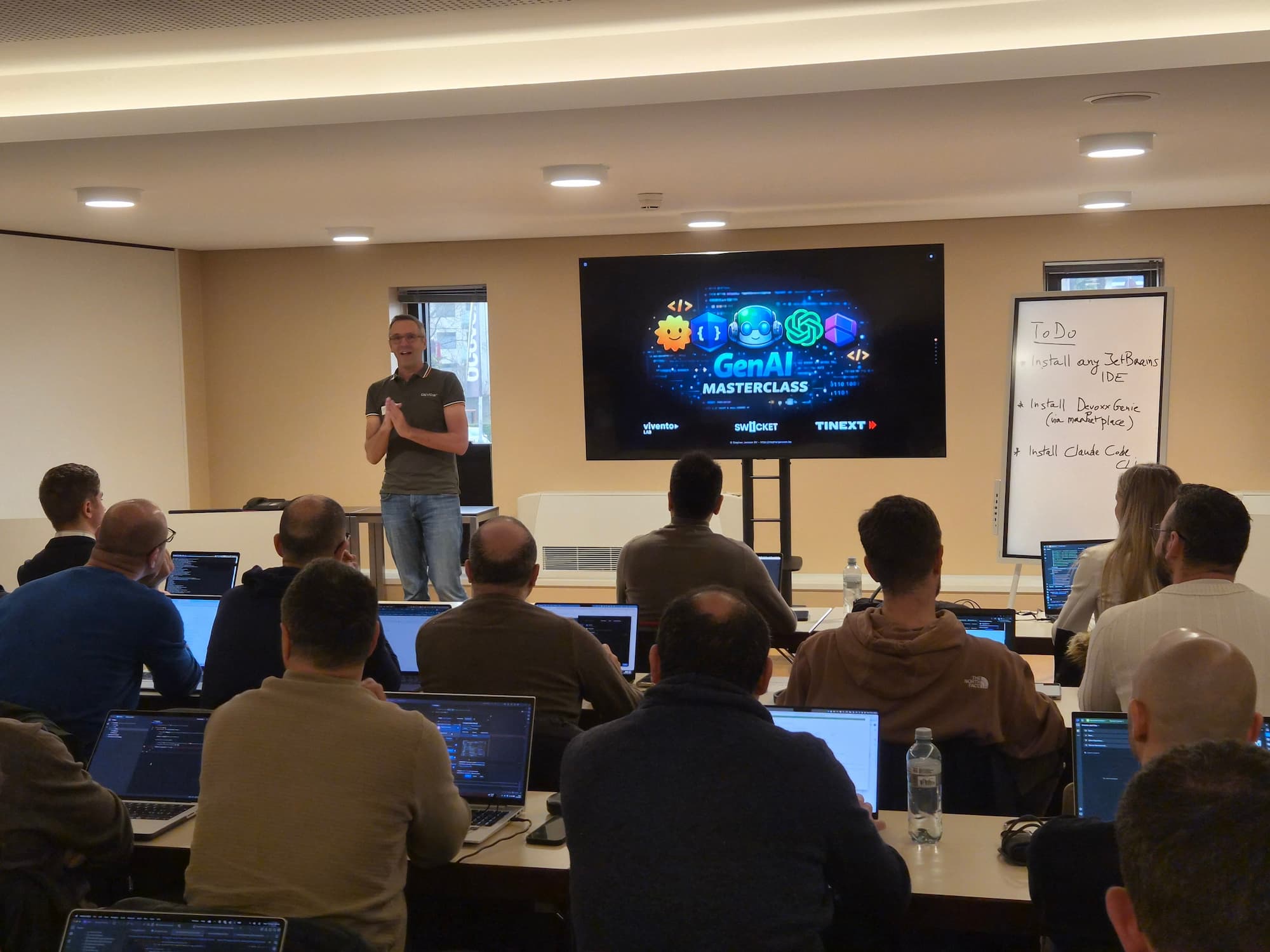
When we organized the GenAI Masterclass with Stephan Janssen, we spent considerable time choosing the right venue. A hands-on AI workshop has specific needs: large screens for code demos, reliable power for every laptop, and enough space for people to move around comfortably. Here is what we learned about venue selection.
Proximity Matters. For Everyone.
Think about convenience for both the speaker and your attendees. If the speaker is traveling internationally, a venue near the airport or with easy public transport links saves time and reduces the risk of delays. For attendees, proximity to the office or to major transport hubs means fewer excuses for late arrivals. If your workshop runs a full day, a central location also makes lunch and after-event options easier.
Prefer Screens Over Projectors
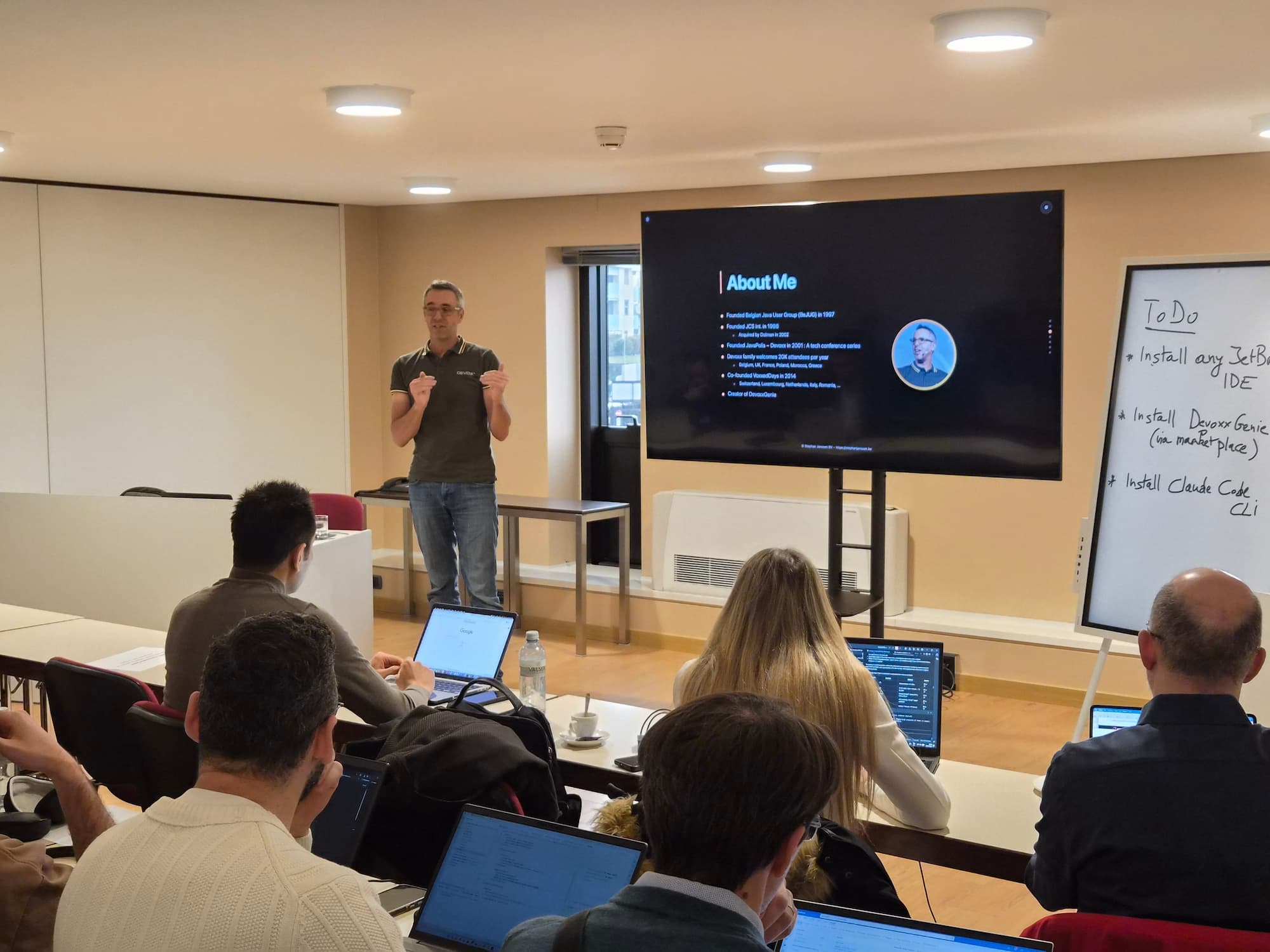
This is one of the biggest lessons from our GenAI Masterclass: for any workshop involving live demos, code, or detailed visuals, large screens beat projectors every time. Projectors wash out in bright rooms, require dimming lights (which puts people to sleep), and often have resolution issues. Instead, look for venues with 85-inch or larger screens. For groups of 15 or more, consider multiple screens so everyone can see clearly from any seat. Also make sure there are enough power outlets: a hands-on workshop where half the laptops die mid-session is a disaster.
Book Bigger Than You Think
Here is a rule of thumb: if you expect 30 attendees, book a room for 50. The extra space is not wasted: it gives you flexibility for a standing coffee break or lunch inside the room, space for the speaker to move around, and a more comfortable atmosphere overall. Cramped rooms kill energy and make long workshops feel even longer. The extra cost for a bigger room is almost always worth it.
Consider Hotel Venues
Hotels with conference facilities are often an excellent choice for corporate workshops. The main advantage: if your speaker is traveling, they can stay at the same venue. This eliminates commute stress on the day of the event and makes early setup easy. Many hotels also offer catering packages that simplify food and drink logistics. Just make sure to verify the screen and equipment situation, as some hotel conference rooms still rely on old projectors.
Accessibility and Transport Links
Never overlook accessibility. Check that the venue has step-free access, accessible restrooms, and clear signage. Also verify parking availability and public transport connections. Send attendees clear directions, including photos of the entrance if it is hard to find. Small details like these show professionalism and prevent frustrating delays on the morning of the event.
Venue Checklist
Before you sign a venue contract, make sure you can check off these essentials:
Large screens (85 inches or more). No projectors!
Enough power outlets for every attendee plus the speaker
Reliable high-speed Wi-Fi with enough bandwidth for all devices
Room capacity at least 50% larger than your expected attendance
Accessible entrance, restrooms, and clear wayfinding
Catering options or nearby food for breaks and lunch
Easy access by public transport and available parking
Conclusion
The right venue does more than provide a roof: it creates the conditions for focused, productive learning. Invest time in finding a space that matches the format of your workshop, and your attendees will notice the difference. In the next part of this series, we will cover how to plan the agenda and set up registration so everything runs smoothly on the day.