When you're organizing a tech conference, medical congress, or large association event with more than 2,000 attendees, your event platform is not just a software choice. It is an operational risk decision.
The wrong platform can lead to slow or failed registrations, compliance challenges, long check-in queues, and frustrated attendees before your event even begins.
In this article, we compare Swicket, Eventbrite, and Cvent based on the criteria that matter most for high-volume conferences: peak-load reliability, data privacy, on-site performance, multilingual support, data ownership, and total cost of ownership.
Quick Overview: Who Are These Platforms For?
Eventbrite
Eventbrite is widely known for ticketing and event discovery, particularly for public events, concerts, and community meetups. It is easy to use and quick to set up, making it popular with small and mid-sized organizers. However, it was originally designed for general-purpose events rather than mission-critical, high-demand conferences.
Cvent
Cvent is a long-established enterprise event platform primarily used for corporate meetings, incentive travel, and large trade shows. It offers a broad and powerful feature set, typically sold through annual contracts. The platform is robust but often complex to configure and best suited to organizations with dedicated event operations teams.
Swicket
Swicket is purpose-built for high-demand conferences such as tech conferences, medical congresses, and large association events. It combines scalable registration infrastructure, native on-site operations, and strong European data protection standards. Swicket is built on a proven open-source core used by many large conferences and enhanced with enterprise-grade hosting and support.
1. Reliability Under Peak Load
When registration opens and thousands of attendees try to register at the same time, platform architecture becomes critical.
Eventbrite
Eventbrite operates on shared infrastructure optimized for a wide range of event types. While this works well for most self-service events, it does not offer event-specific SLAs. During concentrated registration surges, performance may be affected, especially for large conferences.
Cvent
Cvent provides enterprise-grade reliability across many corporate workflows. However, it is generally optimized for structured registration patterns rather than sudden, consumer-style traffic spikes involving thousands of concurrent users.
Swicket
Swicket is designed specifically for registration surges. It uses dedicated, auto-scaling infrastructure and offers a 99.5% uptime SLA. The platform has been used at large conferences where thousands of tickets are sold within minutes, maintaining consistent performance throughout peak demand.
Best fit for peak-load reliability: Swicket
2. Data Privacy & Compliance
For European organizers, and especially for medical, scientific, or public-sector events, data protection is not optional.
Eventbrite
Eventbrite is headquartered in the United States, with attendee data processed on US-based infrastructure. Standard GDPR features such as consent management and data export are available, but data residency and sovereignty options are limited.
Cvent
Cvent is also US-based and offers European hosting options for enterprise customers. GDPR tooling is available, though advanced compliance configurations can add complexity and often require enterprise-level engagement.
Swicket
Swicket is headquartered in Switzerland, with attendee data hosted in Swiss and EU data centers by default. It complies with GDPR and the Swiss Federal Act on Data Protection (nFADP). Each customer operates on an isolated database, ensuring attendee data is not co-mingled with other organizations. Full data export is available at any time.
Best fit for data privacy and sovereignty: Swicket
3. On-Site Check-In & Badge Printing
The first hour of your conference shapes the entire attendee experience.
Eventbrite
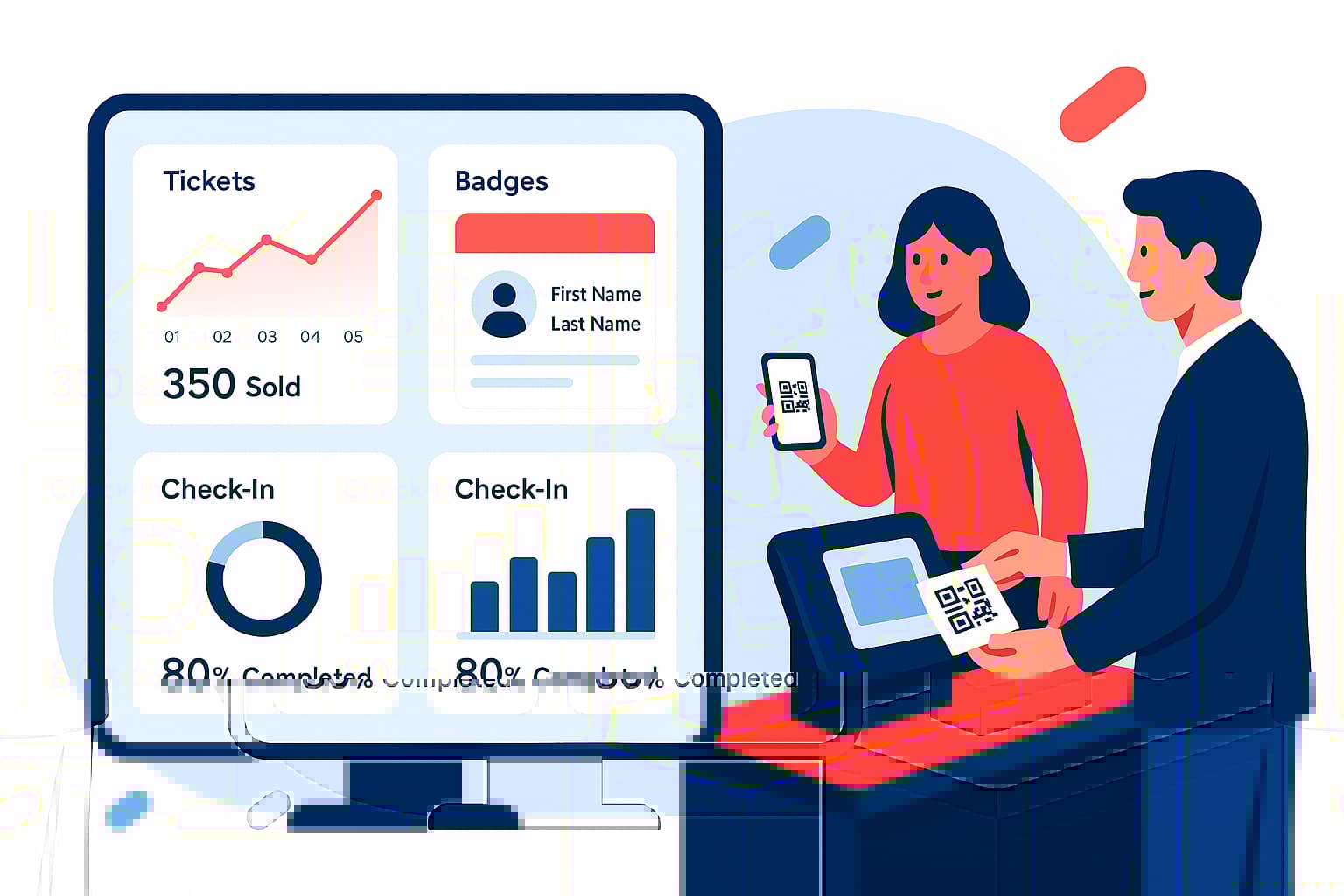
Eventbrite provides a mobile check-in app with QR code scanning. Badge printing typically requires third-party tools, and native offline operation and real-time on-site analytics are limited.
Cvent
Cvent offers comprehensive on-site solutions, including badge printing and kiosks. These solutions are powerful but often require proprietary hardware, advance configuration, and additional service fees, making them more suitable for large, recurring enterprise events.
Swicket
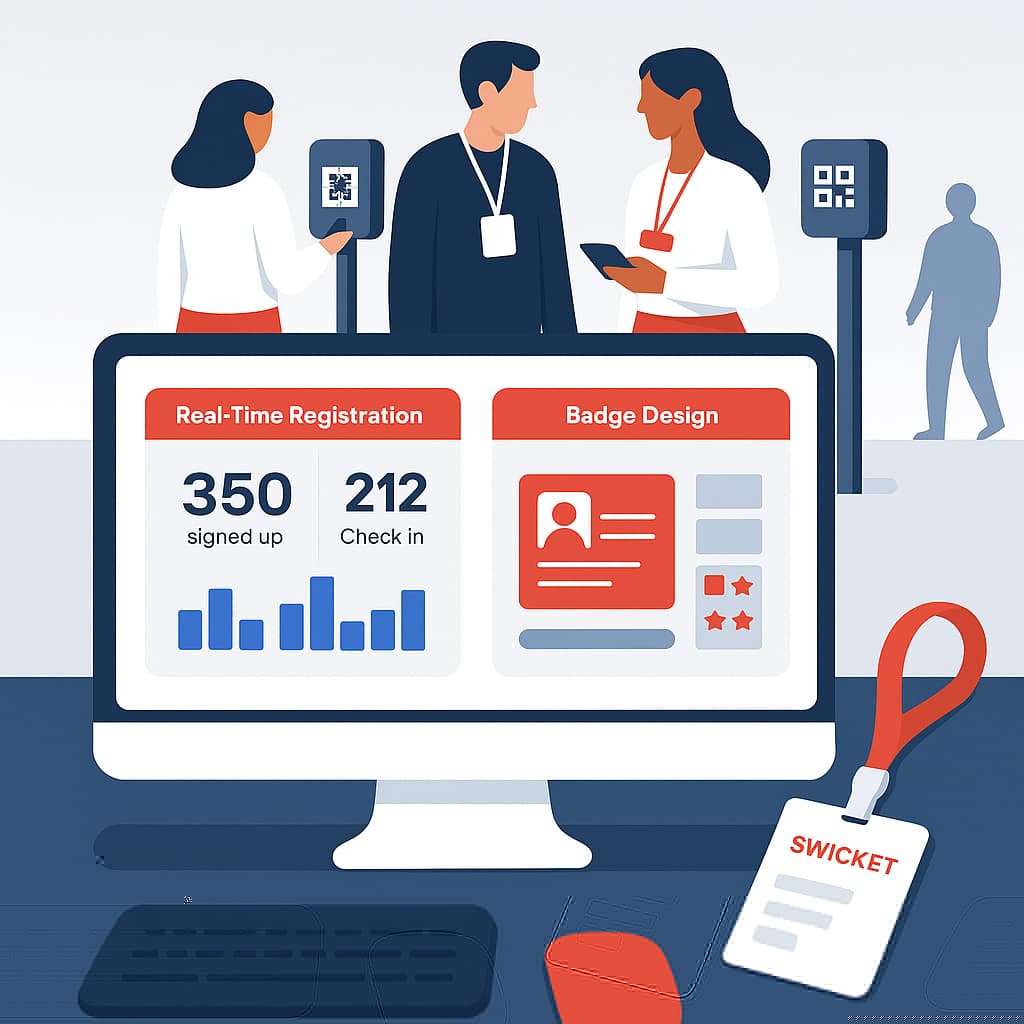
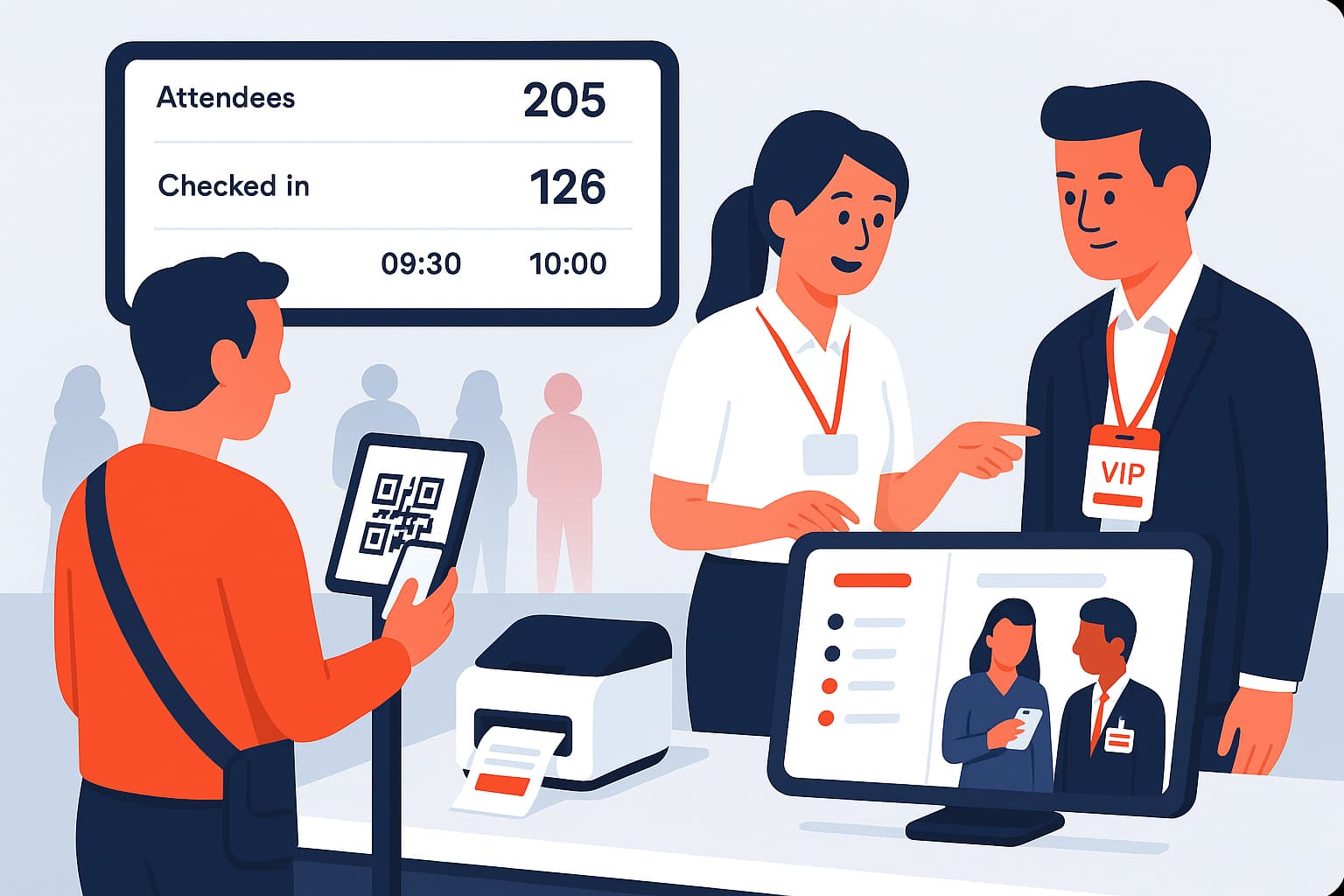
Swicket includes native on-site check-in and on-demand badge printing out of the box. It works with standard tablets and printers and supports offline mode, ensuring check-in continues even if venue connectivity fails. The platform has been proven at events processing thousands of check-ins within short time windows.
Best fit for fast, flexible on-site operations: Swicket
4. Multilingual Support
Large international conferences often serve attendees from many countries.
Eventbrite
Eventbrite supports basic localization but offers limited native support for fully multilingual registration flows and badge templates.
Cvent
Cvent supports multi-language registration and communications, typically at higher tiers and with additional configuration effort.
Swicket
Swicket supports 14 languages out of the box, including all major European languages. Registration forms, confirmation emails, badges, and attendee-facing interfaces can be fully localized, with automatic language detection based on browser settings.
Best fit for multilingual conferences: Swicket
5. Vendor Lock-In & Data Ownership
Your attendee data should remain under your control, even if you change platforms.
Eventbrite
Basic attendee data can be exported, but deeper historical data and analytics are closely tied to the platform's ecosystem. Event listings are hosted within Eventbrite's environment.
Cvent
Cvent supports data export, but annual contracts, auto-renewals, and deep ecosystem integration can create significant switching costs. The platform is proprietary, with no self-hosting option.
Swicket
Swicket provides full data export in standard formats such as CSV and JSON at any time. There are no mandatory annual contracts, and the open-source core allows organizations to self-host if needed. Data ownership remains fully with the organizer.
Best fit for long-term flexibility: Swicket
6. Pricing & Total Cost of Ownership
Pricing models matter more as ticket volumes and prices increase.
Eventbrite
Eventbrite typically uses per-ticket fees. While suitable for smaller events, this model scales directly with ticket price and volume, which can significantly increase costs for large conferences.
Cvent
Cvent uses enterprise pricing with annual contracts. Total cost varies depending on selected modules, on-site solutions, and professional services, often requiring substantial upfront commitments.
Swicket
Swicket offers transparent pricing without per-ticket percentage fees. Core features such as multilingual registration, check-in, and badge printing are included, resulting in more predictable and often lower total cost of ownership for high-volume conferences.
Best fit for cost predictability at scale: Swicket
Head-to-Head Summary
Peak-load reliability: Swicket > Cvent > Eventbrite
Data privacy and residency: Swicket > Cvent > Eventbrite
Check-in and badge printing: Swicket > Cvent > Eventbrite
Multilingual support: Swicket > Cvent > Eventbrite
Vendor lock-in: Swicket > Eventbrite > Cvent
Best overall fit by use case:
Swicket: high-volume conferences and congresses
Eventbrite: self-service events and meetups
Cvent: corporate meetings and enterprise trade shows
The Bottom Line
Eventbrite is a strong choice for smaller, public-facing events.
Cvent is well suited to enterprises already embedded in its ecosystem.
But if you are running a high-demand conference where registration surges, data protection, and on-site throughput are critical, Swicket is built specifically for that reality.
With Swiss-grade data protection, proven high-volume performance, native on-site operations, and a transparent pricing model, Swicket gives conference organizers reliability and control where it matters most.